Pressure situations test leadership skills more than anything else. A good leader knows that words can either build trust or create more stress. In difficult moments, smart communication helps teams stay calm, focused, and productive.
In this article, you will learn what great leaders say in high pressure situations, which negative phrases to avoid, and how positive communication can improve leadership and teamwork.
Benefits of Positive Leadership Communication
Positive communication can:
- Reduce workplace stress
- Strengthen trust
- Improve employee performance
- Improve team morale
- Increase productivity
- Encourage innovation
When employees feel respected and supported, they are more motivated to perform well.
50 Powerful Phrases Great Leaders Use
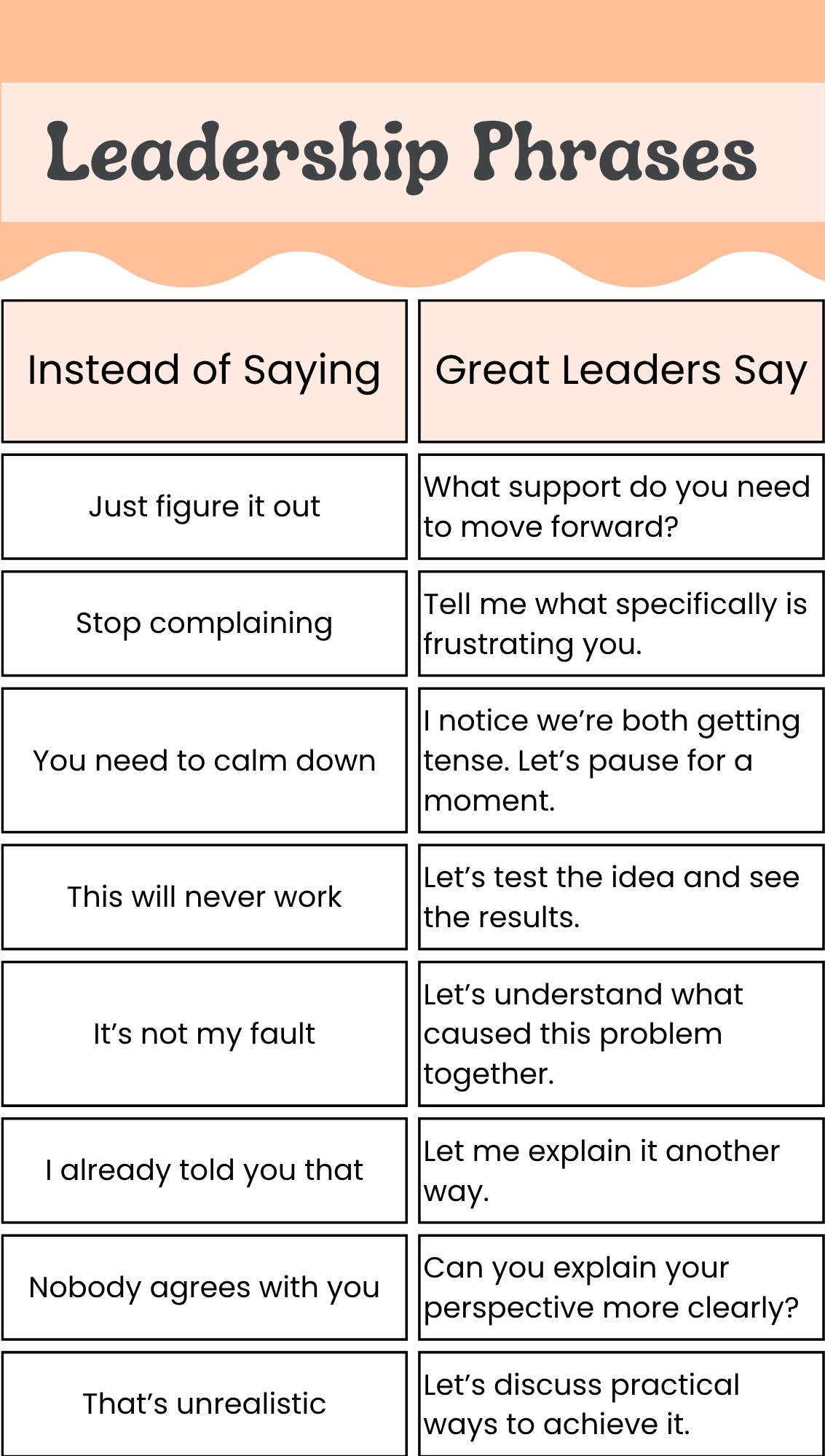
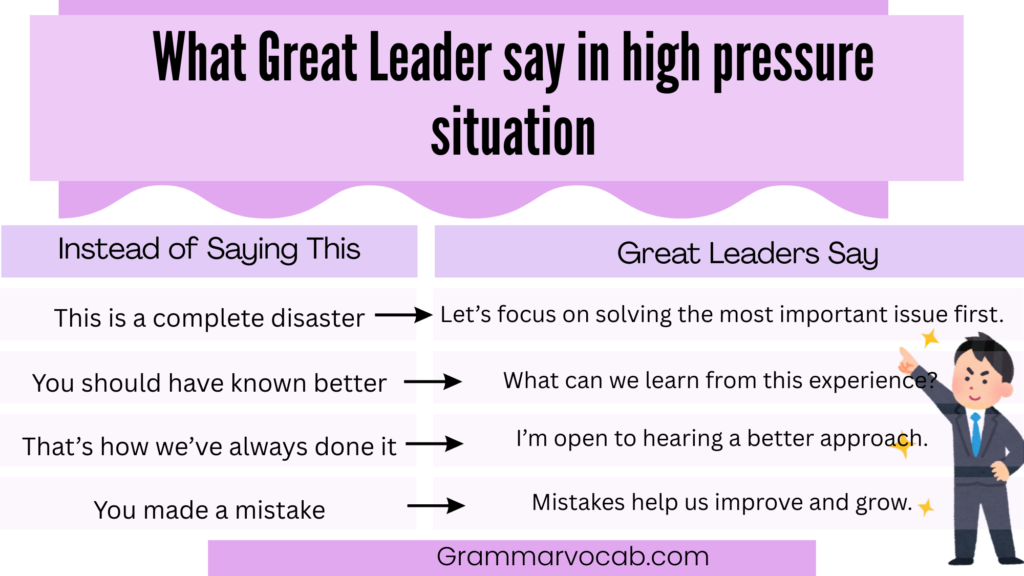
| Negative Phrase | Better Leadership Phrase |
| This is a complete disaster | Let’s focus on solving the most important issue first. |
| You should have known better | What can we learn from this experience? |
| That’s how we’ve always done it | I’m open to hearing a better approach. |
| You made a mistake | Mistakes help us improve and grow. |
| Why isn’t this done yet? | What is blocking progress right now? |
| That’s not my problem | How can I help solve this? |
| Just figure it out | What support do you need to move forward? |
| Stop complaining | Tell me what specifically is frustrating you. |
| You need to calm down | I notice we’re both getting tense. Let’s pause for a moment. |
| This will never work | Let’s test the idea and see the results. |
| It’s not my fault | Let’s understand what caused this problem together. |
| I already told you that | Let me explain it another way. |
| Nobody agrees with you | Can you explain your perspective more clearly? |
| That’s unrealistic | Let’s discuss practical ways to achieve it. |
| Don’t challenge me | I appreciate different viewpoints. |
| That’s stupid | Let’s rethink this approach carefully. |
| I can’t help you | Let’s find someone who can support this. |
| You’re not good enough | Let’s identify areas for improvement. |
| That’s your responsibility | Let’s work together to solve it. |
| This meeting is wasting time | Let’s focus on key action points. |
| I don’t want excuses | Help me understand the challenges you faced. |
| This is your mess | Let’s work together to fix the issue. |
| This is impossible | Let’s explore possible solutions. |
| We tried that before | What would make this attempt different? |
| Nobody wants to work hard anymore | How can we motivate the team better? |
| This team is weak | We still have room to grow stronger together. |
| This conversation is over | Let’s continue this discussion later calmly. |
| We don’t have time | Let’s prioritize what matters most. |
| I don’t care | Your opinion matters to me. |
| I don’t trust your decision | Walk me through your thinking process. |
| That idea is bad | How can we improve this idea? |
| You always make problems | Let’s focus on finding solutions. |
| There’s nothing we can do | Let’s focus on what we can control. |
| You failed | What can we do differently next time? |
| That deadline is impossible | Let’s discuss a realistic timeline. |
| You never listen | I want to make sure we understand each other. |
| Hurry up | Let’s work efficiently and stay focused. |
| This makes no sense | Can you explain your idea further? |
| I’m too busy | Let’s schedule time to discuss this properly. |
| You are too slow | How can we improve efficiency here? |
| I’m disappointed in you | I know you can do better than this. |
| You are not qualified | Let’s build the skills needed for this task. |
| Do it my way | Let’s compare different approaches first. |
| Don’t ask questions | Feel free to ask anything you need. |
| You’re being difficult | Let’s understand each other better. |
| You’re overreacting | I understand this situation feels stressful. |
| Fix this immediately | Let’s create a quick action plan. |
| You don’t understand | Let me explain more clearly. |
| I’m the boss | Let’s work as a team on this. |
| You are wrong | Let’s examine the facts together. |
Tips to Speak Like a Great Leader
- Listen First
Strong leaders listen carefully before responding.
- Stay Professional
Even in stressful moments, maintain respect and patience.
- Use Positive Words
Positive wording increases cooperation and morale.
- Encourage Growth
Turn mistakes into learning opportunities.
- Focus on Solutions
Avoid blaming language. Concentrate on fixing the problem.